Best Time to Visit Varanasi 2026: Weather, Festivals & Travel Tips
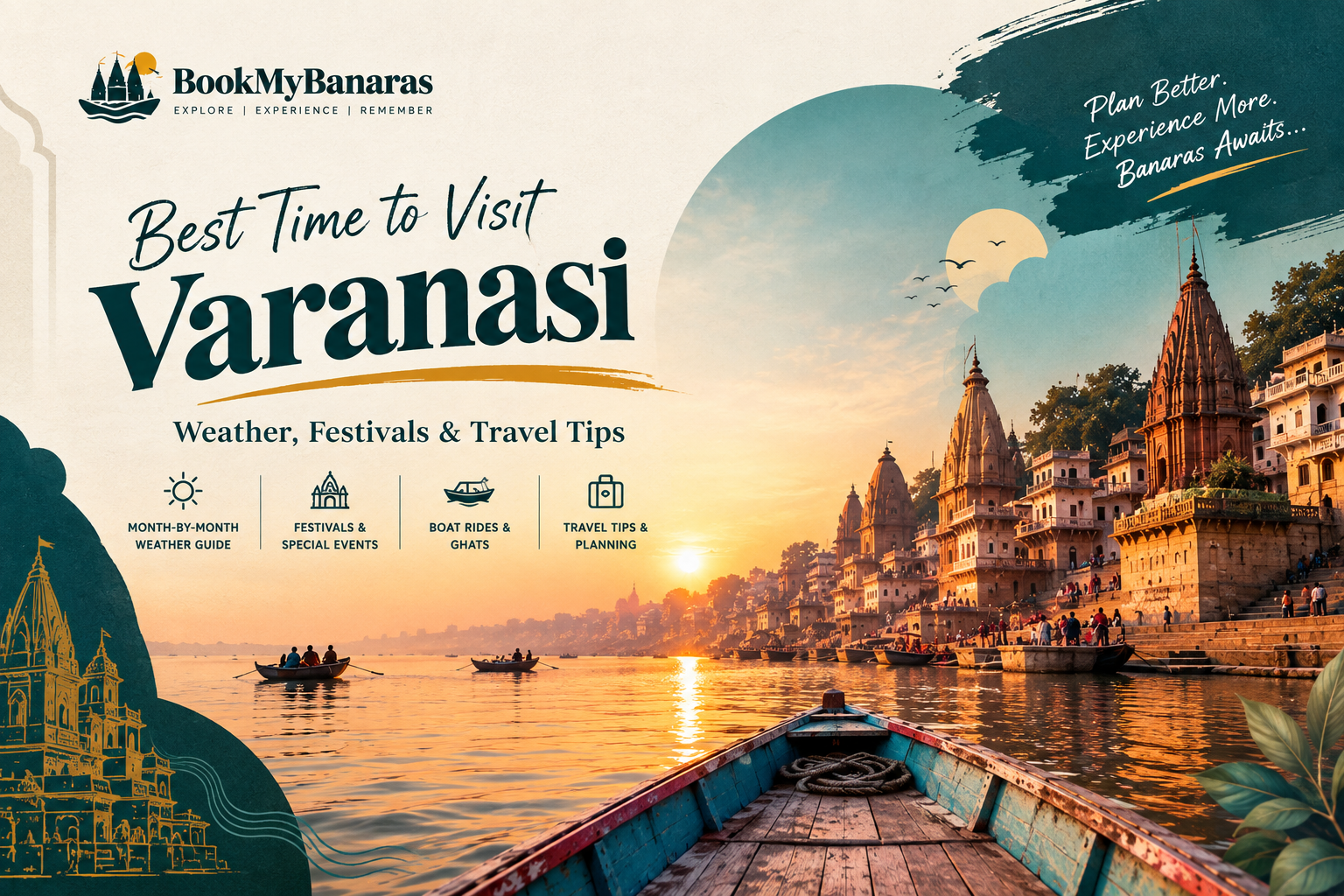
Best Time to Visit Varanasi
Planning a trip to Varanasi and wondering when to go?
The best time depends on what you want from your Banaras experience.
If your priority is comfortable sightseeing, walking through the old city, exploring the ghats and taking a boat ride on the Ganga, the cooler months from October to March are generally the most comfortable. Incredible India also identifies October to March as the most pleasant period for exploring Varanasi.
However, Varanasi is not only about weather.
Different months bring different experiences — winter mornings with mist over the Ganga, festive evenings, religious celebrations, summer heat, monsoon river conditions and the changing rhythm of the ghats.
So instead of asking only “When is the best time to visit Varanasi?”, it is better to ask:
“What kind of Varanasi experience do I want?”
Quick Answer: What Is the Best Time to Visit Varanasi?
For most first-time travellers, October to March is the most comfortable travel window.
Best months for comfortable sightseeing
October to March
Best for winter atmosphere
December to February
Best for festivals
Festival dates vary each year, but major occasions such as Dev Deepawali, Ganga Mahotsav and Mahashivaratri can create a particularly vibrant atmosphere.
Best for sunrise boat rides
October to March is generally comfortable, although boat experiences are possible throughout the year when river and weather conditions permit.
Hottest period
April to June
Monsoon period
Generally July to September, when rainfall and Ganga water levels can affect riverfront activities.
Varanasi Weather at a Glance
Varanasi experiences a wide range of temperatures throughout the year.
Official tourism information currently lists approximate temperature ranges from around 4.5°C in January at the lower end to over 45°C in May at the upper end.
Month | General Conditions | Good For |
|---|---|---|
January | Cold mornings, pleasant afternoons | Ghats, temples, boat rides |
February | Cool to comfortable | Sightseeing, photography |
March | Increasing warmth | General sightseeing |
April | Hotter afternoons | Early-morning activities |
May | Very hot | Early mornings, temples |
June | Hot and humid | Short outdoor activities |
July | Monsoon | Rainy atmosphere, flexible travel |
August | Monsoon | Indoor/cultural experiences |
September | Post-monsoon transition | Changing riverfront conditions |
October | Pleasant transition | Ghats, boats, sightseeing |
November | Comfortable | Festivals, sightseeing |
December | Cool mornings | Ghats, photography, temples |
These are broad planning ranges rather than guaranteed daily conditions. Weather can vary from year to year.
Best Time to Visit Varanasi Month by Month
January — Cold Mornings and Beautiful Ganga Views
January is one of the colder months in Varanasi.
Mornings can be quite chilly, particularly around the Ganga, but the cooler weather makes walking around the ghats and old city much more comfortable than during summer.
The river can also develop a misty atmosphere on winter mornings.
January is good for:
Sunrise boat rides
Ghats
Temple visits
Old City walks
Photography
Ganga Aarti
Sarnath
Winter food experiences
If you are planning a winter trip, carry warm layers for early mornings.
February — Comfortable Weather for Exploring
February generally remains comfortable for sightseeing.
It is a good month for travellers who want to combine temples, ghats, food, walking and boat experiences without dealing with extreme summer heat.
It is also a good period for photography because early mornings and evenings can offer softer natural light.
If your trip is focused on exploring different parts of the city, you can combine the riverfront with the Ghats of Varanasi guide and the Kashi Vishwanath Temple guide.
March — Comfortable but Warmer
March marks the transition towards warmer weather.
Early mornings can still be pleasant, but afternoons gradually become hotter.
For travellers visiting during March, it is useful to schedule outdoor activities earlier in the day.
A good March schedule can include:
Morning: Ganga boat ride
Late morning: Temples and Old City
Afternoon: Rest, food and shopping
Evening: Ganga Aarti and riverfront
For a detailed itinerary structure, see 2 Days in Varanasi.
April — Hotter Weather Begins
April can become noticeably hot, particularly during the afternoon.
This does not mean you cannot visit Varanasi.
It simply means your itinerary should be planned differently.
If visiting in April:
Start sightseeing early
Take your boat ride in the morning
Avoid long walks during peak afternoon heat
Keep hydrated
Take breaks between activities
Plan temple and indoor visits during hotter hours
Early morning and evening can still be enjoyable.
May — Peak Summer Conditions
May is generally one of the hottest months in Varanasi.
Official tourism data lists May temperatures reaching above 45°C in its current climate information.
For many travellers, this makes long daytime sightseeing less comfortable.
If you have flexibility and your main goal is extensive outdoor exploration, you may prefer the cooler months.
But if May is the only time you can travel, you can still enjoy Varanasi by changing the rhythm of your trip.
Better summer strategy:
5:00–8:00 AM: Ganga and ghats
Morning: Temple visits
Afternoon: Hotel/rest/food
Evening: Old City or Ganga Aarti
June — Hot and Humid
June continues to be a challenging month for extensive outdoor sightseeing.
Temperatures remain high and humidity can increase.
If you visit during June, avoid trying to cover too many attractions in the afternoon.
Focus on:
Early-morning boat rides
Temple visits
Food
Short walks
Evening Ganga Aarti
Cultural experiences
July to September — Monsoon in Varanasi
The monsoon changes the character of Varanasi.
Rain, humidity and changes in the Ganga water level can affect riverfront activities.
This is particularly important if your main reason for visiting is:
Boat rides
Ghat photography
Long riverside walks
Outdoor sightseeing
During high-water conditions, some ghat areas and boat operations can be affected.
For current river conditions, travellers should check the latest local situation before planning a river-focused trip. BookMyBanaras also maintains a dedicated latest Varanasi flood and boat-status update.
Important: Current river conditions can change quickly, so a general seasonal article should not be treated as a real-time boat or ghat-status update.
October — One of the Best Months to Visit
October marks an important transition towards the more comfortable travel season.
Temperatures begin to become more manageable compared with peak summer, although afternoons can still be warm.
It is a particularly interesting month for travellers who want to experience Varanasi after the monsoon period.
However, river conditions can still vary, so if your trip depends heavily on boat rides, check the latest operating conditions.
For a complete experience, combine your visit with:
Ganga boat ride
Ghats
Kashi Vishwanath Temple
Old City
Local food
Ganga Aarti
You can also explore the complete Varanasi Travel Guide before planning your itinerary.
November — Comfortable Weather and Festival Atmosphere
November is one of the most attractive months for a Varanasi trip.
The weather becomes increasingly comfortable, making it easier to spend time outdoors.
This period can also coincide with major cultural and religious celebrations.
If you want to experience a festive version of Banaras, check the festival calendar before booking your trip.
For travellers interested in Dev Deepawali, remember that dates follow the Hindu lunar calendar and therefore change each year.
December — Winter Begins
December brings cooler mornings and comfortable sightseeing conditions.
The combination of:
Cold morning air
Ganga
Ghats
Boats
Temple bells
Evening lights
Old-city lanes
creates the classic winter atmosphere many travellers associate with Varanasi.
If you enjoy photography, December can also be particularly interesting during sunrise and early morning.
Best Season to Visit Varanasi
October to March — Comfortable Travel Season
For most travellers, this is the easiest season for exploring Varanasi.
You can comfortably combine:
Ghats
Boat rides
Temples
Old City
Food
Sarnath
Ganga Aarti
Walking tours
Incredible India specifically identifies October to March as the most pleasant period for exploring Varanasi.
April to June — Summer
Summer is hot, particularly during the afternoon.
If you travel during these months, build your itinerary around early mornings and evenings.
A sunrise boat ride followed by breakfast and temple visits can work much better than spending the middle of the day walking around the city.
July to September — Monsoon
Monsoon can bring rain and changing river conditions.
For travellers interested mainly in temples, food and cultural experiences, a monsoon trip can still work.
For boat rides and extensive ghat exploration, however, current river conditions should be checked before travelling.
Best Time for a Varanasi Boat Ride
A boat ride is one of the signature experiences of Banaras.
For many travellers, early morning around sunrise is particularly memorable.
The riverfront becomes visible gradually as the city wakes up.
You can see:
Historic ghats
Temples
Morning rituals
Boats
River reflections
Pilgrims
Local life
For a detailed planning guide, read Varanasi Boat Ride: Price, Timings, Sunrise & Ganga Aarti Guide.
You can also explore BookMyBanaras Signature Boat Experiences if you want to plan a dedicated boat experience.
Best Time for Ganga Aarti in Varanasi
Ganga Aarti is generally an evening experience at the riverfront.
Dashashwamedh Ghat is particularly associated with the major evening Ganga Aarti, which draws large numbers of visitors.
The experience can be watched from the ghat area or from the river, depending on local arrangements and conditions.
For exact planning, read the Ganga Aarti in Varanasi visitor guide.
Best Time for Photography in Varanasi
If photography is important to your trip, the cooler months can offer several useful conditions.
Early Morning
Excellent for:
Sunrise
Boats
Ghats
River reflections
Morning rituals
Mist
Evening
Useful for:
Ganga Aarti
Golden-hour river views
Old City
Street scenes
Lamps and evening atmosphere
Winter mornings can be particularly atmospheric because of mist over the Ganga. Incredible India also notes this winter river atmosphere.
Best Time to Visit Varanasi for Festivals
Varanasi becomes especially lively during major religious and cultural festivals.
Some important occasions include:
Dev Deepawali
Ganga Mahotsav
Mahashivaratri
Holi
Diwali
Navratri
Festival dates change every year, so check the dates for the specific year of your trip before booking.
Incredible India specifically highlights Dev Deepawali, Ganga Mahotsav and Mahashivaratri among the occasions that can offer a particularly distinctive Varanasi experience.
Keep in mind
Festival periods can also mean:
Larger crowds
Higher demand for accommodation
More traffic
Changes to local movement
Greater demand for boats and guides
So book important services early if travelling around major festivals.
Best Time for First-Time Visitors
If this is your first trip to Varanasi, October to March is generally the easiest period for combining multiple experiences.
A first-time visitor can plan:
Morning: Boat ride + ghats
Late morning: Kashi Vishwanath + Old City
Afternoon: Food + rest
Evening: Ganga Aarti
Another day: Sarnath + local exploration
For a longer planning overview, use the Varanasi Travel Guide.
How Many Days Should You Spend in Varanasi?
The ideal duration depends on how deeply you want to explore.
2 Days
Good for a first introduction.
You can cover:
Ganga
Ghats
Boat ride
Kashi Vishwanath
Ganga Aarti
Old City
Local food
3 Days
Allows more relaxed exploration and gives you time for Sarnath and additional experiences.
If you have three days, see the 3 Days in Varanasi itinerary.
What to Pack for Varanasi
Your packing list should change according to the season.
October to March
Carry:
Light layers
Warm jacket for early mornings
Comfortable walking shoes
Sunglasses
Personal medicines
Small day bag
April to June
Carry:
Light cotton clothing
Hat/cap
Sunglasses
Sunscreen
Reusable water bottle
Comfortable footwear
July to September
Carry:
Lightweight rain protection
Quick-dry clothing
Comfortable footwear
Waterproof bag for electronics
Extra clothes
Is Varanasi Worth Visiting in Summer?
Yes, but summer requires more planning.
The biggest issue is not that Varanasi becomes inaccessible.
It is the heat.
If you visit during April–June, plan outdoor activities around early morning and evening.
A summer trip can still include the Ganga, temples, food, Old City and Ganga Aarti.
Is Varanasi Worth Visiting During Monsoon?
Yes, but expectations should be realistic.
The monsoon can change riverfront conditions.
If your trip is mainly about temples, food, culture and the Old City, you can still have a meaningful experience.
If your main purpose is boat rides and extensive ghat exploration, check current river conditions before travelling.
Best Time to Visit Varanasi: Simple Recommendation
If you want the simplest answer:
Choose October to March.
For cooler weather and winter atmosphere:
December to February
For a balance of comfortable weather and festive atmosphere:
October to November
For warmer but still manageable conditions:
March
For summer:
April to June
For monsoon:
July to September, with extra attention to weather and river conditions.
Frequently Asked Questions
What is the best month to visit Varanasi?
There is no single best month for every traveller. For comfortable sightseeing, October to March is generally the most favourable period.
Which month is best for a Varanasi boat ride?
October to March is generally comfortable for boat rides, especially for travellers who prefer cooler mornings. Boat operations can still depend on current river and safety conditions.
Which month is best for Varanasi photography?
December to February can be particularly attractive for photographers because of cooler mornings, softer light and possible mist around the Ganga.
Is Varanasi very hot in May?
Yes. May is among the hottest months, with official tourism climate data showing temperatures can exceed 45°C.
Can I visit Varanasi during monsoon?
Yes. However, rainfall and changing Ganga water levels can affect outdoor and riverfront activities.
What is the best time to visit Varanasi for Ganga Aarti?
Ganga Aarti is an evening experience and can be enjoyed throughout the year, subject to local arrangements. Dashashwamedh Ghat is one of the principal locations associated with the ceremony.
How many days are enough for Varanasi?
Two days can provide a good first introduction, while three or more days allow a slower and more complete exploration of the city.
Is winter good for Varanasi?
Yes. Winter is particularly comfortable for walking, exploring the ghats, visiting temples and taking boat rides. Winter mornings can also bring mist over the Ganga.
Final Thoughts
There is no single month that defines Varanasi.
The city changes with the seasons.
Winter brings misty mornings and comfortable walks.
Spring brings warmer days.
Summer slows the city down.
Monsoon changes the relationship between the Ganga and the ghats.
Autumn brings more comfortable weather and the beginning of the major travel season.
For most travellers, October to March is the easiest period to experience Varanasi comfortably, while festival dates can offer an entirely different atmosphere.
Whatever month you choose, plan around the experiences that matter most to you — the Ganga, ghats, temples, food, Old City, Sarnath and the evening Ganga Aarti.
Banaras is not just a destination to see. It is a city to experience.
About BookMyBanaras
BookMyBanaras helps travellers discover and plan Varanasi experiences including boat rides, local guides, spiritual services, stays and curated travel experiences.
Plan your Varanasi journey with BookMyBanaras.